Introduction: For those of you that have stumbled across this website and are interested in reading about my trek through the universe of the Tidal streaming service, let me tell you a bit about what I did. Back in 2016 I thought it would be kind of cool to listen to artist’s catalog from start to finish and rank them from best to worst. After all, who doesn’t like a good list? I thought I might do a few of them and see what happened, hoping it would introduce me to records that were foreign to me in the arsenal of an artist I was familiar with. I also though that it would be pretty cool to get out of the “one off” mode of listening to a new record, years after the previous one, in order to get a true sense of how the artist matured over time. Flash forward to June of 2019 and 250 catalogs later, I have ended the trek. I posted these all on Facebook over the years as they were completed but I’m going to move them all over here, starting with #1, in order to expand them out a bit more.
As with all my catalogs, to be considered in the ranking, an album has to meet certain criteria:
- The artist must actually perform on 80% of the tracks (soundtrack and rap provision)
- No compilations of previous released material will be included.
- The
album must have been released officially and within the realm of the
label that the artist would have been on at the time or official
releases posthumously (normally applies to a slew of live records) - Any EPs must contain new new music and be relevant to the catalog, not be more like a single with a b-side or two.
- Compilations
of previously recorded material will be included if they are remixes,
bonus tracks, outtakes… mostly music that hasn’t been part of a main
release before)

Entrance Point: Just like the previous full catalog I completed (Rush), this is in tribute to my former roommate, Tony Manero. I mentioned in that one that I woke up to Rush every day and that was true but when Rush wasn’t on, Iron Maiden was. I remember no other artists ever being played by that man. True story, not just my memory failing me. That said though, I was already listening to Iron Maiden way before that but I was never really that into them as progressive metal was never really my thing. Then I did this catalog and realized that holy shit, I had mislabeled them my entire life. Iron Maiden are just simply pure fucking Heavy Metal man!
All Albums ranked on a 10 star scale.
- Powerslave (10)
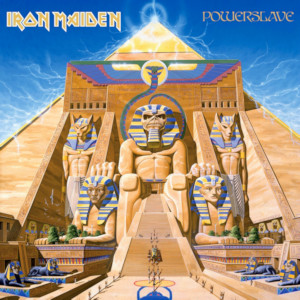
Iron Maiden had just come off The Number of the Beast and Piece of Mind, two fantastic records but their fifth record in as many years is their crowning moment. In the span of three years Iron Maiden had released 25 pretty fucking amazing songs, which is really hard for any band to do over the course of three consecutive albums, let alone complicated works of art like these in such a short time frame. It should be a blueprint for all bands. When you hit a creative peak, write, write, write, record, record, record. Keep going while those ideas are flowing. And I love that all members of the band brought songs to the table to record and yet the tunes all feel like Maiden numbers, not Steve Harris songs but as if all five members were always on the same page.
As a heavy metal fan, I feel it’s virtually impossible to not jump out of your seat at the start of the record, with the two singles, “Aces High” and the killer, “2 Minutes to Midnight” followed by the amazing instrumental track “Losfer Words.” And if that wasn’t enough, the first side of the record closes with “The Duellists” with Adrian Smith’s and Dave Murray’s guitars playing brilliantly off each other. Then on the backend, the album closes with the monstrously epic, nearly 14 minute “Rime of the Ancient Mariner.” After that, you should be drenched in sweat and exhausted but if you aren’t, there’s plenty more music to listen to.
- Live After Death (10)

I’ll have to check back in at the end but I’m pretty sure this is one of only two live records that scored a perfect 10/10 in my catalogs. As I’ve stated many times, I really dislike most live records as they never seem to capture the energy of the band as they would have been live and that’s totally expected. But this one does. Of the massive number of live albums Iron Maiden has, this will always be the essential one. Live After Death was recorded on the Powerslave tour and during the 90 minute set they hit 13 of the tunes from Powerslave, The Number of the Beast and Piece of Mind. There are also four tracks from the first two Maiden records, which featured Paul D’Anno on vocals before they iconic voice of Bruce Dickinson made its way to the fold. This was the creative peak of the band and while these guys were non-stop tour-write-record-tour-repeat for years, they were still young and energetic and coming off the best material they would ever put to disc. Everything you’d want to hear is present and blowing out your eardrums – from “The Trooper” to “2 Minutes to Midnight” and “Run to the Hills.” I have never seen Maiden live and don’t know if I would have much interest these days but I’ve watched a few concerts on TV and Live After Death completely captures the energy, ferociousness and spirit of the band perfectly. It’s not the only one of their live albums that do this but the collection on this one is simply out of this world.
- Somewhere in Time (9.5)
- Seventh Son of a Seventh Son (9.5)
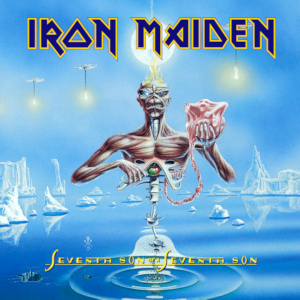
Seventh Son of a Seventh Son is thankfully the seventh studio record from Iron Maiden, released in 1988. This album was the first one in my mind that truly felt like a progressive metal record. The first two tracks on the B side of the album certainly help this notion along with the nearly 10-minute title track containing quite a few complex time changes and “The Prophecy” changing directions a few times during the duration of the track. The album is notable for Adrian Smith playing keyboards on it, which is the first time an actual keyboard was used on a Maiden record but that keyboard isn’t intrusive in any way, nor does it lighten the sound of the band at all. The record also contained one of their most well known singles in “Can I Play with Madness” as well “The Evil That Men Do” and the awesome, rollicking closer, “Only the Good Die Young.”
- Killers (9)
- Piece of Mind (9)
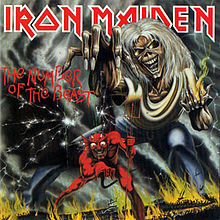
- The Number of the Beast (9)
Paul Di’Anno was the first lead singer of Iron Maiden on their first two records but when Steve Harris didn’t feel like he could hack it any longer, nor hit the notes needed for the more traditional heavy metal direction he was going in, they replaced him with Samson vocalist Bruce Dickinson, who of course has become an icon. The Number of the Beast is Maiden’s third album overall, the first with Dickinson at the helm and the first of many to define the band’s sound. While the band hadn’t hit their full stride yet, this album was certainly a precursor for what was to come. If the killer riff in “Children of the Damned” didn’t suck you in right away, then the title track must have, or Dickinson’s crazy falsetto in the single “Run to the Hills.”
- A Real Live One (9)
- Brave New World (8.5)
- Death on the Road (8.5)
- Iron Maiden (8.5)
- Flight 666 (8)
- Maiden England (8)
- A Matter of Life and Death (8)
- A Real Dead One (8)
- Book of Souls (8)
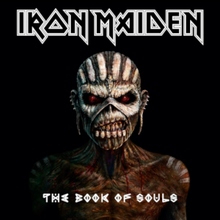
My expectations weren’t really high for Book of Souls when it was released in 2015. I had heard the first single “Speed of Light” which feels like a mix of Maiden, punk and hair metal. It was part of a 92 minute double disc, which 16 albums into a career is usually not a good thing – indicating moreso that the band can no longer seem to police itself on length. In addition, the album was delayed because Bruce Dickinson had a cancerous tumor removed. So this record had a lot going against it but apart from that single, it’s got a lot going for it. Guitarist Adrian Smith had left the band for a while and was replaced by Janick Gers but when Smith returned to the fold, Gers stayed on as well making a blistering three-headed guitar attack now. It allowed them to keep the riffs super heavy while adding in some rhythm as well. And the three guitarists were likely essential for this record because they wrote and recorded most of the tracks in the studio to give the album a live feel – and they used mostly first takes of the songs. There’s only 11 tracks on the record, which means that over the course of 92-minutes you have some sprawling tracks, nonemoreso than the longest song in their catalog and the second single, “Empire of the Clouds,” which was written solely by Bruce Dickinson. The song begins with a long passage of piano and strings before guitars get brought in the mix to play off the piano. Every time I listen to the song, I think of a really progressive version of G’n’R’s “November Rain,” as it has a similar vibe to it. Overall, it’s a long record, maybe a bit too long but pretty damn solid for guys that are almost senior citizens.
- The Final Frontier (7.5)
- Beast Over Hammersmith (7)
- Dance of Death (7)
- En Vivo! (7)
- Live at Donnington (6)
- Rock in Rio (6)
- BBC Archives (6)
- X Factor (6)
- No Prayer for the Dying (6)
- The Book of Souls: Live Chapter (5)
- Fear of the Dark (5)
- Virtual XI (4)

I write about this one because I cringed listening to this. At this point, the lead singer of the band was Blaze Bayley – who absolutely didn’t fit Iron Maiden’s style and was so very different from Bruce Dickinson. Virtual XI was the second and final album to feature Bayley on vocals, who seemed more like a metal Meat Loaf at the time, then a metal frontman. Everything is wrong with this album. The drums are buried in the mix, the guitars are flat which takes all the energy out of the record and the first single “The Angel and the Gambler” sounds like it’s recorded by an aging hard rock band performing at your local livestock festival. That alone is a nearly 10-minute beast with nearly the full time being un-fucking-listenable. “The Clansman” is one of the few moments on the record that’s actually passable at Iron Maiden music. Really, what I’ve never understood is that Maiden auditioned “hundreds” of singers to replace Bruce Dickinson and this is who they chose? Blaze Bayley would be a decent vocalist for a dirty punk-metal band or someone like the Misfits but he just didn’t work for Maiden. Thankfully, the experiment only lasted two fateful discs.
Summary: 28 albums, average 7.6


 The Trusty Steed