
The definition of a Rabbit Hole is similar to this: Used to refer to a bizarre, confusing, or nonsensical situation or environment, typically one from which it is difficult to extricate oneself.
While listening to music doesn’t seem like something bizarre or confusing, what I do can often be nonsensical and difficult to get myself out of, so I think it fits many of the treks I do through the Tidal streaming service. This series should be no different.
What I’m simply planning on doing with this series is having someone recommend a starting record, listening to that on Tidal and then using the “Similar Artists” algorithm to go down the rabbit hole and see what records it leads me to. The trek will continue until I hit an album that is either A) so great that there’s no reason to move forward, B) so bad that it derails me or C) feels like a natural end point. In the end, we’ll see how the records hold up and how solid the connections are.
So, to begin:
- Stabbing Westward – Wither Blister Burn & Peel

The other day I stumbled across their biggest hit “What Do I Have To Do?” somehow (I don’t even remember how I got here) but decided to listen to the full record which I hadn’t heard since it came out and from there, thought it might be a good rabbit hole to go down the industrial rock/metal path. Now, this of course is on the more modern end of the scale since it came out in 1996 and was a heavy rock record but it still represents the era very well. Grinding riffs, drum programming, strong keyboard use and a highly mechanized feel to it. But it’s also a moody record in places, dark and creepy at times in songs that start off slow but pick up power as they go along. It’s definitely dated now but I still enjoyed it 24 years later.
- God Lives Underwater – Empty

From there I could have went the obvious route with Marilyn Manson but I chose to try to go a bit deeper with the band God Lives Underwater. Empty was first full LP, produced by Rick Rubin and released on American records who tried to capitalize on the growing industrial market in the 90s. You’d have no idea this was a Rick Rubin record on the surface as it has none of his sound to it but it’s still pretty solid for the style. This was 1995, my sophomore year in college and an album I listened to a lot before I went to bed – probably not the greatest choice before trying to sleep for the night but these crazy kids, amiright? And this hasn’t held up well over time. There are some really cool riffs on this record but for the most part these guys have one path – industrial grind over pop hooks. The whole album follows this blueprint until the end where it goes off the rails for the last two songs. I liked this back in the day, not so much now.
- Prick – Prick
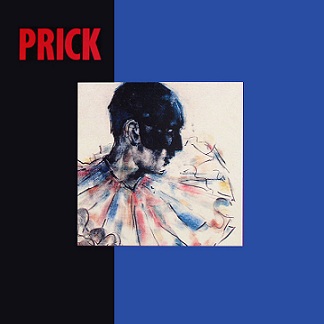
As a Nine Inch Nails fan, I was excited about this record, produced by Trent Reznor and on his Nothing records – and I loved this record back in college. A short lived project from Kevin McMahon, he released this album in 1995, supported David Bowie on a tour and then as he was going to start work on album #2 – the label decided they wanted more radio friendly songs and McMahon refused, thus putting the band on hiatus (he would release a follow up in 2002 though). But this album is still a burst of fucking energy that lasts for the entire 43 minutes of the record. No, it’s not radio friendly but it’s almost danceable in the end and contains both heavy riffs and great hooks. It’s a fuzz blast of melodic industrial grind that still holds up great after all these years.
- Jane Jensen – Comic Book Whore
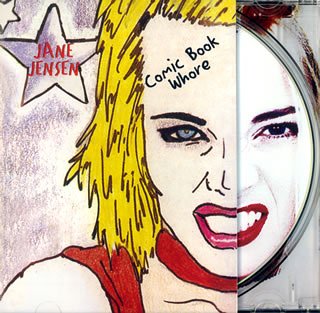
I remember this from the cover art from my days at WTSR radio as the music director. I only remember one song from it (“Luv Song”) which is more of an alt-rock song than the pop-industrial feel the rest of the disc has. And I don’t know if we did anything with it when it came in or if I just took it because it didn’t really fit our format. The album was on Interscope in 1996, back in the time frame where major labels still snatched up every damn group in the world and gave them a one album shot. Well, this did nothing and she disappeared from music until 2003 when she finally released another disc. The major label curse actually hurt a lot of artists in the 90s. They got one shot, failed and then many of them either never released another record or waited years and years to get another one out on some indie label that no one had ever heard of before. This album really isn’t very good and has nothing on it that would seem ripe for radio play with a sound somewhere between pop and industrial but very little catchy enough to stick.
- Leather Strip – Underneath the Laughter

This rabbit hole took an odd turn from here. The Tidal algorithm only offered me three similar artists: Stabbing Westward which is where we started, Poe, would would have taken me on a completely different path altogether and Leather Strip, who are an electro-industrial group. Maybe I understand Poe but I don’t get how either of these groups line up with Jane Jensen but if I’m sticking to the plan, this is where it took me.
I had never heard of Leather Strip but it’s apparently one German dude named Claus Larsen, who has created more than 20 albums worth of electro-industrial of which reminds me of the short period of time that I listened to Front 242, Front Line Assembly and more. Underneath the Leather doesn’t do much for me though as it’s pretty much a standard version of the genre. Apparently they are very popular though, so may I just choose the wrong album.
- Die Krupps – Volle Kraft Voraus!

I could have went further down the grinding electro-industrial hole but didn’t think that was a good choice, so I pivoted to Tidal’s recommendation of Die Krupps – also German EDM but instead of picking an album in the same general mid 90s time frame, I went back to their second record released in 1982, with hopes of changing the path a bit.
I had a Die Krupps moment in time at some point in my life, back when I would get on a genre bandwagon and have to go after everything that sounded like it but I can’t remember when that was – certainly not back in here in 1982, for damn sure. But maybe I should have ventured back this far and maybe I will not as this is pretty awesome. Aside from the overly busy “Wahre Arbeit, wahrer Lohn” the rest of the album is less grinding industrial like this rabbit hole started out and more EDM (Electronic Dance Music) and/or Neue Deutsche Welle at the most. But it’s catchy, weirdly “fun” if you can say that for this style and even though all the lyrics are in German, it still mesmerized me for a little more than a half hour.
- Throbbing Gristle – 20 Jazz Funk Greats
Moving to Die Krupps took me on the path I wanted to go on from the start but took a long while to get to – back to the late 70s and early 80s of industrial music of all sorts. And well, I’ve heard that this record may be the best industrial record of all time and I’ve never heard it before – so it’s about time I got to it, which made choosing this path down the rabbit hole pretty simple.
And…I don’t “get it.” I’m pretty open to most genres and I was surely open to this but this is a stark, minimal, industrial record with elements of synth-pop but an it’s surely good but not nearly the experimental grind I was expecting out of the group.
- Einstürzende Neubauten – Ende Neu
I actually bought this record the day it came out in 1996. To people that know me and know this era of my musical collection – I bought, sold and traded constantly to pick up almost any new release that fit in any sort of genre I was into at the time and at this point I was 20 and in college and the dude that came to our student center every week with the releases knew me very well. I can’t imagine how much money I would have saved had Tidal existed back then. I can’t say I wouldn’t have bought this as my tastes have changed so many times over the years that it’s hard for me to say what my mindset was at the time other than “oooohhh new! Shiny!” but this doesn’t do much for me at all right now. I remember liking one song in particular though – the 11 minute “NNNAAAMMM” which I actually still do like quite a bit but the rest is dull experimental rock music, varying between industrial, rock and ambient and sort of just there.
And with that, I’m going to end this Rabbit Hole. I wanted to go down this path and get to some of the classic Industrial bands but once I got there, maybe I should have let the algorithm take me down the more modern path. But what fun is that really?


 The Trusty Steed