May I Have Another?: Information Society

Ever watch one of those VH1, “one-hit wonders” specials, where the random D level commentators start talking about these artists that had one hit, where half of them actually had multiple songs that charted? Random commentator probably has no idea but then somewhere in there Matt Pinfield comes in with his “I’m smarter than you and probably no fun at all” persona and makes sure you know they had another song that charted exactly at #98 for one week in 1984. Well, I’m the everyman’s Pinfield but funnier and better looking. This series will go back to the 80s and spotlight one-hit wonders (in the US), real (truly only one charting hit) or perceived (other songs charted low but they are known for just one song) and come to a definitive verdict if we should accept or reject their status as that one-hit wonder.
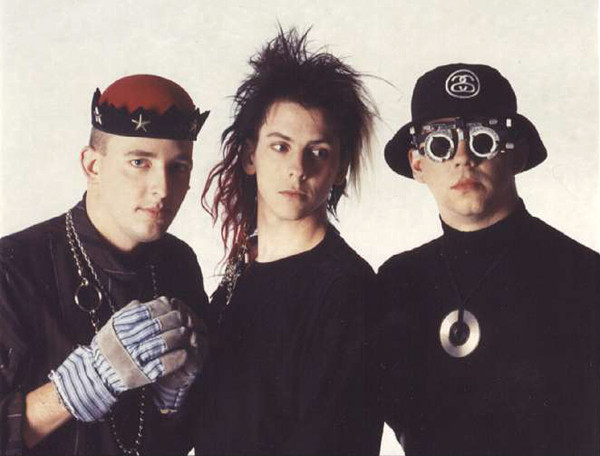
Even choosing Information Society for this series was tough in my mind because they had multiple hit songs but my criteria is that multiple reputable outlets have called them a one-hit wonder and that’s happened here for one reason or another.

The core of the band (Paul Robb, Kurt Harland and James Cassidy) came together in the early 80s with Robb really being the mastermind behind the project. Robb was really into hip-hop and house music at the time and while there’s a hip-hop influence on a lot of songs, the house music influence is felt the greatest. Interestingly enough, Information Society were one of the rare non hip-hop artists on Tommy Boy Records as well. InSoc themselves though were a snyth-pop band though normally on the more freestyle / Hi-NRG end of the genre.

Their “debut” self-titled album in 1988 was their first full length but early on in their career they released two synth-pop EPs including one called Creature of Influence in 1984. They even had a single back then releasing “Running” which was good enough to be rerecorded in a slightly more polished version than the original.

“Running” (original version)

They toiled away for four years after that EP though and it wasn’t until June of 1988 that the debut was released and was a smash right away thanks to the first single, “What’s On Your Mind (Pure Energy)” which hit #3 on the Hot 100 and #1 on the dance charts in the US.

“What’s On Your Mind (Pure Energy)”

By the end of ’88, the album had went gold thanks to being one of the most infectious discs of the era. What InSoc did so well was make house music for pop lovers. House certainly was a large part of the 80s but a bunch of the better house tracks were relegated to the dance charts due to bands focusing mostly on getting asses moving. Information Society took that and added tremendous pop hooks and sing-along choruses to really open up their potential fan base. Throughout their career they have maintained the same level of infectiousness without really repeating themselves, however the music world obviously changed around them in the early 90s and so their heyday was limited to a 2-3 year period.

The debut record had four total singles – the aforementioned hit, “Walking Away,” a ballad called “Repetition” and a great cover of the Abba hit, “Lay All Your Love On Me.”

“Lay All Your Love On Me”

InSoc’s second album (Hack) wasn’t as great as the first but was still extremely enjoyable. However, it got bad reviews and marked a departure from the sound of the first album. Harland pushed the band towards a darker synth-pop sound on a few tracks, while the rest of the band really wanted to continue on the path of the debut. It makes for a bit of a jolting listen at first with “Seek 200” beginning the album with more of an industrial vibe, followed by almost a pure pop song called “How Long” and then the single from the record, “Think” which sounded very much like the proper follow up to the debut. Growing up, I listened to both of these records like crazy, moreso the first since it was the most consistent of the two records. And although in retrospect it wasn’t much of tune at all, I was obsessed with the sample heavy electronic song, “A Knife and a Fork.” What the album lacked was a true identity. It ranges from industrial, to pop, to house and synth-pop without any barriers being put in place. I do like the album track-by-track but it can be a tough listen due to the constant style changes.

“A Knife and a Fork”
“Seek 200”

The final album of their original period was Peace & Love, Inc. in 1992. This was a more consistent record than Hack, though it upped the freestyle tenfold. Paul Robb wrote most of the tracks on the album, which meant a much better flow throughout. However, by this point, the entire music scene had changed and though the title track was a decent enough tune, InSoc lost any momentum it might have still had. There is also nothing stranger than the final track of the album, “300bps N, 8, 1 (Terminal Mode or Ascii Download)” which is supposedly a text file, encoded as modem tones, which when decoded tells the story of something that happen to the band while on tour. It’s three minutes of modem noise. Not kidding.

“Peace & Love, Inc.”

The band had released three more albums since that point with a highlight being “Beautiful World” from the Hello World record in 2014. The track is a cover of a Devo song and features Gerald Casale on this version. Overall it simply sounds like a remastered version of the original. (Editor’s Note: Thanks to Keith C. for pointing out that this was indeed a cover tune, so this is edited from the initial version).

“Beautiful World”

All three records are decent and at least the last two really reflect the sound that the band had back in the late 80s with some technology advances. I applaud you if you even knew these existed though.

Verdict: The one-hit wonder status of Information Society is firmly rejected. It’s amazing to me that they are even considered that but once they hit a VH1 special, game over. “What’s On Your Mind (Pure Energy)” is the song that supposedly makes them a one-hit wonder but “Walking Away” hit #9(!) for heaven’s sake and “Think” went to #28, so they had not one but two top 40 hits after their first. Both of those tracks are awesome, so there’s no way InSoc should ever be labeled as a one-hit wonder.

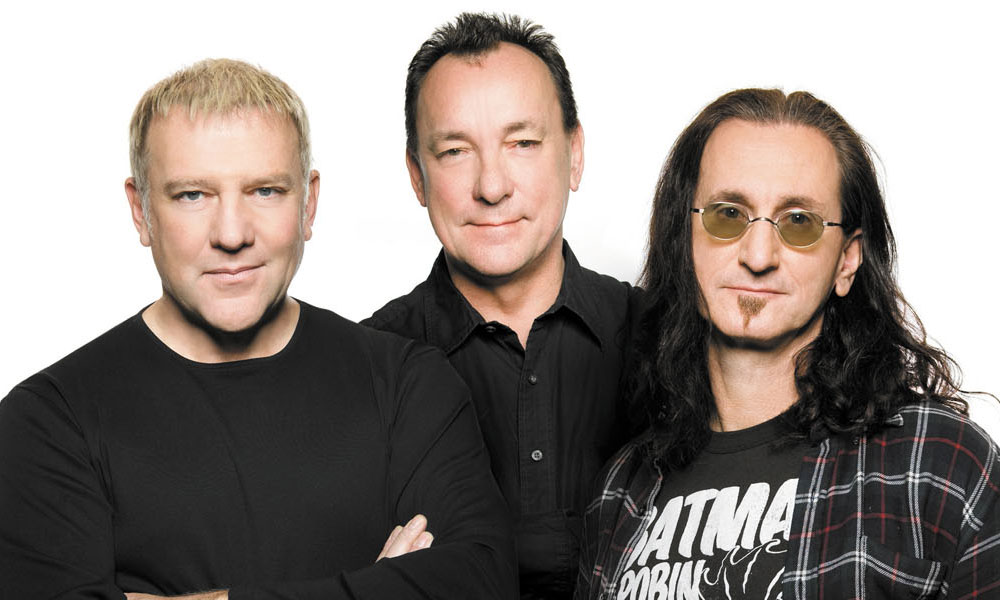
Tidal Catalog #9: Rush

Introduction: For those of you that have stumbled across this website and are interested in reading about my trek through the universe of the Tidal streaming service, let me tell you a bit about what I did. Back in 2016 I thought it would be kind of cool to listen to artist’s catalog from start to finish and rank them from best to worst. After all, who doesn’t like a good list? I thought I might do a few of them and see what happened, hoping it would introduce me to records that were foreign to me in the arsenal of an artist I was familiar with. I also though that it would be pretty cool to get out of the “one off” mode of listening to a new record, years after the previous one, in order to get a true sense of how the artist matured over time. Flash forward to June of 2019 and 250 catalogs later, I have ended the trek. I posted these all on Facebook over the years as they were completed but I’m going to move them all over here, starting with #1, in order to expand them out a bit more.

As with all my catalogs, to be considered in the ranking, an album has to meet certain criteria:

  • The artist must actually perform on 80% of the tracks (soundtrack and rap provision)
  • No compilations of previous released material will be included.
  • The album must have been released officially and within the realm of the label that the artist would have been on at the time or official releases posthumously (normally applies to a slew of live records)
  • Any EPs must contain new new music and be relevant to the catalog, not be more like a single with a b-side or two.
  • Compilations of previously recorded material will be included if they are remixes, bonus tracks, outtakes… mostly music that hasn’t been part of a main release before)

Entrance point: A former roommate of mine listened to Rush every day and I was woken up many mornings by the sound of tunes from Moving Pictures and 2112. I knew their 80s works and enough of their catalog to make me dangerous. But I have never really liked progressive rock, so Rush is not a group I would normally hunt out material from.

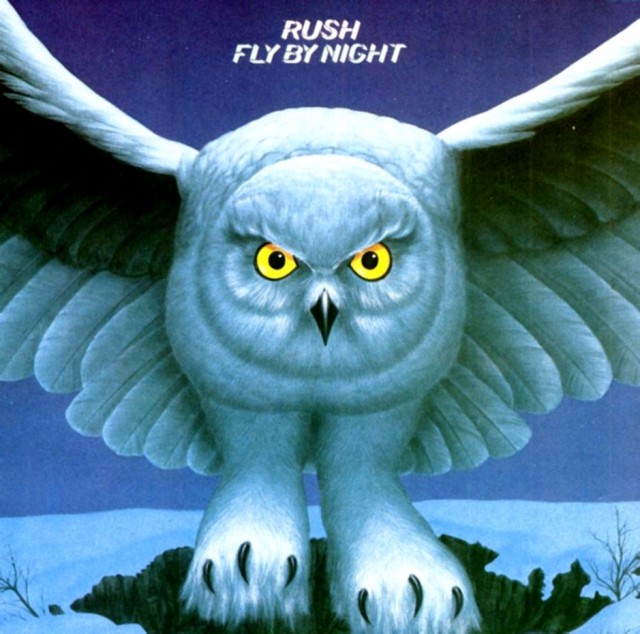
  • Fly By Night (10)

Fly By Night is not the record I thought would be at #1 going into this trek. It had a few things going against it.

  1. I barely like any music before, say 1978 or so.
  2. I really tend to move away from “progressive” rock.
  3. I had listened to Moving Pictures like 9000 times thanks to my former roommate, so I expected that record at #1.

Somehow though, Fly By Night is my favorite Rush record. The debut is a rock record with very little of the progressive tendencies they were known for. But as they brought Neil Peart on board for this record, they started incorporating some progressive elements to their songs, so this is really the starting point for the sound they crafted for the next few decades.

A lot of this is pure rock and roll, sometimes I get a Zep feel, sometimes a bit of AC/DC as well. The 1-2 punch of “Anthem” and “Best I Can” open the album, with their first real recognizable single in “Fly By Night” opening up the second side are highlights on the record. But it’s really the first progressive suite on their records, “By-Tor and the Snow Dog” that really caught my ear right away. It’s a four part suite, with part III actually broken into a four separate parts with Neil Peart’s fantastic drumming really anchoring the tune throughout.

This is also the album where Geddy Lee really started getting his voice for the sound. Lee has somehow maintained the same quality vocal range over the course of his entire career and while he sounds young here and slightly grittier than he would on future records, you definitely know it’s him.

“By-Tor and the Snow Dog”
  • Rush (10)
  • Grace Under Pressure (9.5)

In 1982, Rush released Signals, which took a pretty drastic turn into using snyths at the basis of their sound. Their regular producer, Terry Brown, really wasn’t the right guy for the change, so they brought in Peter Henderson to take them in this new direction on Grace Under Pressure in 1984. Apparently he just couldn’t make up his mind on a lot of things, so while he’s credited as the producer of this record, the band did most of it. And with that, they likely got the exact sound they wanted.

With Grace Under Pressure they scaled back slightly on the keyboards, though they are still prominent and brought back a lot of rock guitar. This album sometimes gets labeled as progressive new wave, which really isn’t true. It’s definitely a progressive rock record as a whole.

The first half of the record contains pretty brilliant rock music. “Distant Early Warning” is a great rocker, followed by “Afterimage” which has a killer snyth hook in it. Though my favorite song (and one of best of Rush’s entire catalog) is “Red Sector A” which of all their tracks, I think really combines their new keyboard heavy sound with the rock guitar the best. As far as I know, it’s the only song about concentration camps during the Holocaust that I can sing along to.

“Red Sector A”
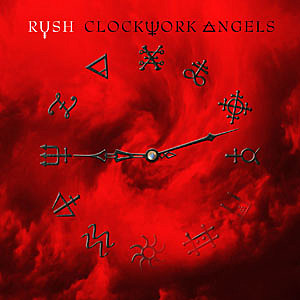
  • Clockwork Angels (9.5)

Rush started in 1968. Clockwork Angels came out in 2012 and is their final album. Forty-four years after they formed, they release their heaviest record ever, possibly their only progressive metal record. And they sound awesome doing it. There are probably a handful of groups, if that, that could say they were making music 40 years after they debuted that was at least as good, if not better, than most of their catalog. So congrats to Rush for that, for damn sure.

Clockwork Angels is heavy as hell. The hard hitting openers of “Caravan” and “BU2B” foreshadow what’s coming down the pike for the full record. Lee’s bass lines are crazy heavy and Alex Lifeson’s guitar solo in “Caravan” is pure shredding. A highlight of the record simply has to be the incredible bass work from Lee on the title track. All of this heaviness blows you away right up front in the first three tracks, but it certainly doesn’t let up as even more melodic tunes like “The Wreckers” still feel heavy due to what’s surrounding it.

“Caravan”
  • Counterparts (9)
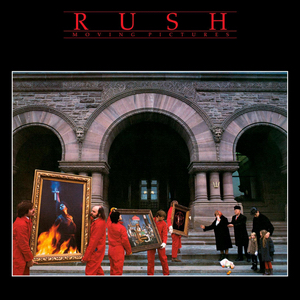
  • Moving Pictures (9)

Like I mentioned above, I expected this to be #1 due to the amount of times I had heard it (and enjoyed it) and of course, being mesmerized by the album commencing with the brilliant riffs of “Tom Sawyer.” And it’s a great record, don’t get me wrong but obviously there are ones I like more. But, still to this day, how great is “Tom Sawyer?” It has to go down as one of the greatest rock songs ever written and Neil Peart’s drumming is fucking crazy on it.

But of course that wasn’t the only single on the album, as one of their other most well known tunes (“Limelight”) is on this record as well. Beyond either one of them though is the massive guitar lick in “Red Barchetta,” a song that starts off like a melodic pop song then hits you over the head with a vicious riff and “YYZ” which is a masterclass in how to create a progressive rock instrumental that completely stands on its own a song.

“YYZ”
  • 2112 (9)
  • Permanent Waves (8.5)
  • All the World’s a Stage (8.5)
  • Farewell to Kings (8.5)
  • Snakes & Arrows (8.5)
  • Hold Your Fire (8)
  • Clockwork Angels Tour (8)
  • Hemispheres (8)
  • Caress of Steel (8)
  • R40 Live (7.5)
  • Power Windows (7)
  • Presto (7)
  • Exit…Stage Left (7)
  • Snakes & Arrows Live (7)
  • Time Machine 2011 (6.5)
  • Different Stages (6)
  • Signals (6)
  • Grace Under Pressure Tour (6)
  • Vapor Trails (6)
  • A Show of Hands (5)
  • Feedback (5)
  • Roll the Bones (4)

Yes, after detailing out some moments on the top record, I did just jump 22 records down the list to Roll the Bones, their 1991 pop record. And I stop here to point out that even though Rush ended up being a great band, not everything was candy and flowers all the time. The early 90s swallowed up Rush just like it did so many other great bands. In trying to stick with the times they took virtually all the edge out of their material and wrote pop tunes. Start with “Bravado” to get an understanding of this. The track doesn’t really resemble a Rush tune in the least bit and while it was probably pretty good for radio, it feels like the band kind of gave up. But the worst is the title track, in which Lee and Lifeson created a generic funk-rock song which Neil Peart also managed to write a rap for. The band couldn’t decide if they wanted an actual rapper on the track, so the voice you hear is just Geddy rapping with a lot of effects to alter his voice. I’m honestly surprised this album didn’t derail their entire career and that somehow, they followed it up with the brilliant Counterparts album.

“Roll the Bones”
  • Test For Echo (4)

Summary: 29 albums, Average 7.4