Ever watch one of those VH1, “one-hit wonders” specials, where the random D level commentators start talking about these artists that had one hit, where half of them actually had multiple songs that charted? Random commentator probably has no idea but then somewhere in there Matt Pinfield comes in with his “I’m smarter than you and probably no fun at all” persona and makes sure you know they had another song that charted exactly at #98 for one week in 1984. Well, I’m the everyman’s Pinfield but funnier and better looking. This series will go back to the 80s and spotlight one-hit wonders (in the US), real (truly only one charting hit) or perceived (other songs charted low but they are known for just one song) and come to a definitive verdict if we should accept or reject their status as that one-hit wonder.
I figured I’d start the series off with a true one-hit wonder, The Buggles. We all know the Buggles based off their lone hit song, “Video Killed the Radio Star.” When it was first released by the Buggles in 1979, it went to #1 in multiple countries but only made it to #40 on the Billboard Hot 100 in the US. And the reason we all likely still remember this song is not from radio play at all. It’s of course because it went down as the iconic first video to air on MTV back on August 1st, 1981. However, that was two years after the single was released to radio. In fact, the Buggles released three more singles after that, even before the video got played.
So let’s step back a minute and look at the Buggles beginnings. This duo is actually two names you might recognize. Trevor Horn is on vocals, bass and guitar and would later go on to be part of Yes, Art of Noise and became a big time producer working with ABC, Frankie Goes to Hollywood, Seal and more. Then there was Geoff Downes on keyboards and drums. Geoff would join Yes soon after the Buggles first album, then come back and soon leave again to form Asia.
The band was formed in 1977 by Downes, Horn and Bruce Wooley, with Wooley intended to be the lead singer. Wooley actually ended up co-writing three tracks on the album including their only hit but during the recording sessions he decided to leave and form his own band, The Camera Club. His group actually ended up recording and releasing “Video Killed the Radio Star” first with a faster tempo and more prominent guitar.
The Buggles version of “Video” was released in September of 1979 and got to number 40 on the Billboard Hot 100, capturing a small part of the new wave / electropop crowd initially. They followed that up with “The Plastic Age” (listed as “Living in the Plastic Age” on the debut album The Age of Plastic) in January of 1980 which really would have been their best shot at another hit. It’s the catchiest tune on their debut but pretty quirky and without a true sing along chorus. After one quirky single that easily stuck in your mind a catchy but less appealing follow up simply didn’t cut it.
The Buggles would release two more singles off their debut, “Clean Clean” and “Elstree” which also didn’t chart. Overall, their album got decent reviews and has held up well over time within the electropop genre but didn’t really have any tunes better than “Video” on it (though “I Love You (Miss Robot)” sung through a vocoder is like Neil Young in his crazy-ish period). Horn and Downes started recording the next Buggles record but while in studio they were next door to Yes and were asked to join the band for the Drama album and tour. Yes broke up after the tour and they went back to recording that second album, Adventures in Modern Recording. Right at the start of those sessions, Downes decided to leave and form the supergroup Asia which left Horn to record the album with other musicians, making this sort of a solo record instead of a Buggles disc.
This 2nd Buggles LP was a bit more progressive in nature and experimented more with quirky sounds and off-kilter rhythms. The record itself is pretty solid but very different from the debut and at this point Horn wasn’t really known well enough for anything to get major airplay just by name.
Around the time the album was released, Horn had signed on to produced ABC’s Lexicon of Love album and he was convinced that producing was what he should focus on and thus ended the Buggles. While Horn and Downes have reunited here and there over the years for concerts, as the Buggles, they never recorded another record.
Verdict: One-hit wonder status accepted. Without MTV, “Video Killed the Radio Star” really might have went down in obscurity as well and while both of their albums were solid enough, there really were no song destined to be hits on either of them.
Introduction: For those of you that have stumbled
across this website and are interested in reading about my trek through
the universe of the Tidal streaming service, let me tell you a bit
about what I did. Back in 2016 I thought it would be kind of cool to
listen to artist’s catalog from start to finish and rank them from best
to worst. After all, who doesn’t like a good list? I thought I might
do a few of them and see what happened, hoping it would introduce me
to records that were foreign to me in the arsenal of an artist I was
familiar with. I also though that it would be pretty cool to get out
of the “one off” mode of listening to a new record, years after the
previous one, in order to get a true sense of how the artist matured
over time. Flash forward to June of 2019 and 250 catalogs later, I
have ended the trek. I posted these all on Facebook over the years as
they were completed but I’m going to move them all over here, starting
with #1, in order to expand them out a bit more.
As with all my catalogs, to be considered in the ranking, an album has to meet certain criteria:
The artist must actually perform on 80% of the tracks (soundtrack and rap provision)
No compilations of previous released material will be included.
The
album must have been released officially and within the realm of the
label that the artist would have been on at the time or official
releases posthumously (normally applies to a slew of live records)
Any EPs must contain new new music and be relevant to the catalog, not be more like a single with a b-side or two.
Compilations
of previously recorded material will be included if they are remixes,
bonus tracks, outtakes… mostly music that hasn’t been part of a main
release before)
Entrance point: I had heard everything through Erotica in full and certainly all the singles past that point. But once Bedtime Stories rolled around, I hit college and kind of lost interest in Madonna.
Not Included: Who’s that Girl? Soundtrack. (While listed as a Madonna album, she only performs on 4 of the 9 tracks, so it doesn’t fit my arbitrary criteria). Immaculate Collection. (I don’t include Greatest Hits ever but I call this out because it’s one of, if not the greatest hits collection ever put together. Painful not to include it but if I did it here, I’d do it for all and those would skew results)
All albums ranked on a 10 point scale.
This was one of my most controversial posts when I put it up on Facebook due to the low ranking of many of her classic records. Of the 250 of these I did, I still think this one is unlike public perception more than any others.
Hard Candy (9)
Yes, ma’am or sirs. My #1 Madonna record is Hard Candy, not one of her universally classic records of the 80s or early 90s.
I had a really hard time with this catalog, which I will expand upon as we go through this. But what I found was that Madonna could create great hits (there’s really no debate there) but there’s a lot of filler between those hits. It took me 11 albums to find the disc that contains the least amount of those filler tunes. I have a feeling it has a lot to do with the fact that the majority of the record was produced by and co-written with Pharrell, who I love despite the fact that he seems to sort of reuse the same general beats over and over again. The tracks that aren’t with Pharrell are with Timbaland, so Madonna really went for it on a hip-hop flavored album and it turned out great.
If you asked me in the 90s if I even thought I’d say Madonna and hip-hop in the same sentence, I would have told you that you were insane. But that’s pretty much what you have on Hard Candy. That said, you don’t have the stupid raps that she has tried throughout the years, so it still comes across as dance-pop with a hip-hop vibe throughout but that’s what works the best here.
When she released “4 Minutes” with Justin Timberlake and Timbaland as the first single, I wasn’t terribly impressed with it but for some reason, I like it a lot more in the context of the record. I also really like the third single, “Miles Away” which likely could have been a great ballad if Timbaland hadn’t tossed a head-boppin’ beat underneath.
The best track on the disc is one of those great Pharrell tunes that harkens back to the early 80s disco-funk era. I’m convinced that “She’s Not Me” would have been a massive hit if it was released. Either way, it’s one of my favorite tracks of the late-period Madonna.
Overall, this is the most consistent record in her catalog from start to finish but while it was of course her disc, I credit Pharrell for this one more than her.
Madonna, “She’s Not Me”
Like A Prayer (8.5)
Here’s the first of the traditionally classic Madonna records, so you might be wondering why with such critical acclaim for this record in particular, that I only have it ranked an 8.5 / 10. And it’s because of the non-singles. The thing to keep in mind here is that I’m ranking albums as a whole, not pieces of albums and not how iconic they are. I may break a tie based on the singles but I believe the reason you see perfect 10’s or close to them across every review on the web is because people are evaluating on the singles and if you are doing a retro review, it’s hard to get out of your head how fucking huge Madonna became after this record.
Obviously the singles are spectacular. “Like A Prayer” is possibly the best single in her catalog. “Express Yourself” and “Cherish” are magnificent tunes to dance to and “Oh Father” is a heart-wrenching ballad. There’s no denying this. And because the disc starts with the title track and “Express Yourself” it’s easy to have gotten caught up in the excitement and missed the fact that the next few tracks were kind of blah. That’s even hard for me to say as the third track is “Love Song” with Prince, my favorite artist of all time. This wasn’t one of his best creations and honestly, it’s out of place on Like a Prayer at all. I love the concept of these two major stars working together but the fact that this collaboration wasn’t even released as a single should indicate that this wasn’t all it was cracked up to be. After that, “Till Death Do Us Part” is a pretty generic throwaway tune for someone at the top of her game like this.
“Dear Jessie” is one of the more interesting tunes on the disc as it’s written as sort of a children’s lullaby, which makes sense since Jessie was co-writer Patrick Leonard’s daughter. It’s a cute song but right it’s placed right after the super upbeat “Cherish” and like “Love Song” kind of kills momentum a little bit.
So yes, overall it’s a decent record but too many of the non-singles seem a little forced to me, so it’s hard to rank this any higher.
True Blue (8.5)
In my original post, I had True Blue as a 7.5 and although I was just in the mode of transferring these over and expanding them out. But then I listened to this album again and I made the executive call to move this up to an 8.5 instead. I had this lower originally because just like Like a Prayer, I thought the non-singles were pretty bad. I still don’t think the final two tracks are all that great but that doesn’t make this deserve a 7.5.
Five of the nine tracks were released as singles (“Papa Don’t Preach” “Open Your Heart” “Live To Tell” “La Isla Bonita” and “True Blue”) and although not officially, I feel like I’ve heard “Where’s the Party” just as much as the hits.
While Like a Prayer made Madonna an icon, this was the album that made her a superstar. Obviously Like a Virgin was a monster hit for her but she could have done what a lot of artists did and followed it up with a stinker but to put out a follow up that was even better as a whole, cemented her place in history.
Madonna, “Papa Don’t Preach”
American Life (8)
MDNA (8)
Madonna (7.5)
Rebel Heart (7.5)
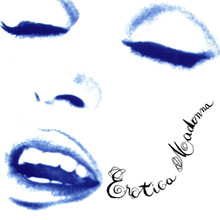
Erotica (7)
Ok, so I stop here because Erotica was a very interesting album for me growing up. I was a teenager watching Madonna grow up on her previous records and was 16 when this album and her Sex book was released. These were the days when MTV premiered a video at the top of every hour when something major was coming out and the “Erotica” video premiered at 10 pm, if I remember correctly (or sometime after safe harbor). I already thought Madonna was hot and at 16, you bet your ass that I stayed up to watch the scandalous video. I remember nothing about the video as it only aired three times (and I haven’t bothered watching it since as I’m supposing it’s tame by today’s standards) but at the time….shivers.
I don’t believe I thought this was a good album at the time nor do I think it’s really that great now but it’s sensual as hell, especially on a track like “Fever.” And when you listen to it now, you can hear the influence of the record with other artists, especially Janet Jackson. Go back and listen to janet. or The Velvet Rope and you’ll hear those slow, breathy, almost spoken erotic moments on them as well. It was a heck of a chance she took, putting out a sexual dance record here but it worked to take her into the next chapter of her career.
To this day, I’ve still never seen Sex, though it wasn’t for a lack of trying back in the day. All I see in my mind is 60-year old Madonna with an eye patch now, so I don’t think I could go back either.
Stopping here to talk about Ray of Light a minute as this is yet another critically acclaimed record from Madonna and pretty much her last one that would be called that. It was labeled as “adventurous,” which is was but now a few decades later, “adventurous” is in Madonna’s (M)DNA.
For Ray of Light, she worked with William Orbit, who was known for electronica and trip-hop at the time, so this album turned out just like that. A pop record at heart but electronic by nature with a lot of Moroccan sounds included.
For me, this side of her doesn’t thrill me. I admit it was a new and intriguing direction for her but I feel the album plods along at a mesmerizingly slow pace at times, missing the energy of almost every other album in her catalog. “Candy Perfume Girl” is a great example of a track that I simply don’t get – in a prime spot (track #4) on the record, it starts off slow and repetitive and then kicks in later with some rock guitar that sounds a bit out of place for Madonna. Sometimes I just don’t get a record and this is one of those times.



 The Trusty Steed